
Referring Providers: Partner with Southbury Neuropathy for Patient Care
We’re not here to replace you as their doctor. We’re here to be the supportive service you recommend to your patients.
Physiologic Insulin Resensitization (PIR) is an advanced treatment offered by the Connecticut Diabetes Center that utilizes precision-timed pulses of rapid-acting insulin to restore healthier insulin signaling and reduce insulin resistance in diabetic patients. This method aims to improve underlying metabolic dysfunction, leading to more efficient glucose utilization and enhanced cellular energy metabolism. The Connecticut Diabetes Center reports a 95% success rate in achieving significant improvement or elimination of diabetic neuropathy symptoms with PIR, based on a Schull Institute study. Patients often experience benefits beyond glycemic control, including improved kidney function, reduced medication needs, and an overall enhanced quality of life.

PIR PATIENTS REPORT:
OPEN LETTER TO PHYSICIANS
Dear Colleagues,
Throughout my career as an Internal Medicine physician, I have cared for countless individuals living with diabetes and its many systemic complications. Despite significant advances in diabetes management, many patients continue to experience progressive neuropathy, declining renal function, fatigue, vascular disease, and other complications—even when blood glucose levels appear reasonably controlled. This is why I was excited to bring Physiologic Insulin Resensitization (PIR) to Connecticut nearly three years ago.
Since opening our program, we have administered more than 2,500 PIR treatments, and I have been extremely pleased with the consistency of the clinical outcomes we have observed. While individual results naturally vary, many patients experience improvements that extend well beyond glycemic control. PIR utilizes precision-timed pulses of rapid-acting insulin delivered in a physiologic pattern designed to more closely mimic normal pancreatic insulin secretion.
Rather than using insulin solely as a glucose-lowering medication, this approach seeks to restore healthier insulin signaling by improving insulin receptor responsiveness and reducing insulin resistance. As insulin sensitivity improves, glucose is utilized more efficiently by cells, supporting normal mitochondrial oxidative phosphorylation and cellular ATP production. Improved cellular energy metabolism may enhance tissue function, repair, and overall metabolic health throughout the body.
In our clinical experience, PIR appears to provide its greatest benefit in patients with diabetic peripheral neuropathy and diabetes-related chronic kidney disease, while many patients also report improvements in energy, functional capacity, and overall quality of life. These observations reinforce an important concept: successful diabetes management should focus on more than blood sugar alone. Addressing insulin resistance may help improve the underlying metabolic dysfunction that contributes to many long-term diabetic complications.
PIR is delivered using an FDA-cleared infusion device together with rapid-acting insulin administered according to a patented treatment protocol. It is intended to complement—not replace—a patient’s existing diabetes management plan. We work collaboratively with each patient’s primary care physician, endocrinologist, nephrologist, and other specialists to help optimize overall diabetic health. As physicians, our shared goal is to reduce the burden of diabetes and improve our patients; long term outcomes. I believe Physiologic Insulin Resensitization represents a valuable adjunctive therapy for appropriately selected patients, and I welcome the opportunity to discuss our program or collaborate in the care of your patients.
Respectfully,
Maria Henry, MD
PIR Medical Supervisor
Diabetes & Neuropathy Restoration Center
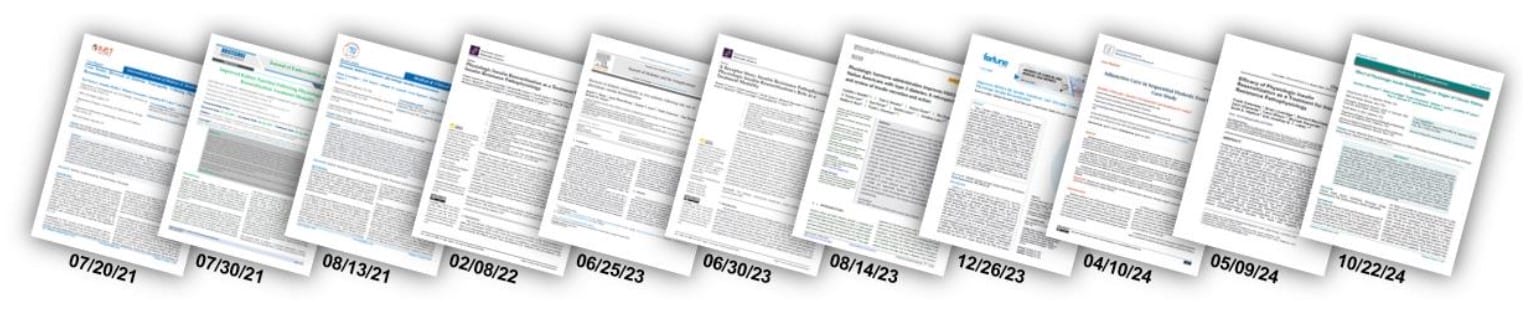
These amazing results are based on published clinical research.
Click here to review and download the studies.
How do PIR treatment results for CKD compare to traditional management?
Clinical studies (of all stages 3A-5) show that with traditional CKD management, the goal is to slow decline, and improvement is rare (based on published data in moderate-to-advanced CKD). In contrast, with P.I.R. treatment, clinical studies show better outcomes, with results from Physiologic Insulin Resensitization (PIR) demonstrating improvement. Clinically, improvement from stage 4 to stage 3, 2 or 1 has been observed in some patients within 12 months of PIR treatment.
WITH TRADITIONAL CKD MANAGEMENT*
Goal is to slow decline. Improvement is rare.

*Based on published data in
moderate-to-advanced CKD.
WITH P.I.R
TREATMENT*
Clinical studies show better outcomes.

*Results from clinical studies of
Physiologic Insulin Resensitization (PIR).
What are P.I.R. patient testimonials and experiences?
These patient testimonials are from Diabetes Relief Centers in Florida. Same P.I.R. Treatment.
(we’ll have our own testimonials soon)
“Exceeded my expectations. Pain in my feet is gone!”
Don | Type 1 Diabetic
“My diabetes & blood pressure are back to normal”
Dennis | Diabetic
“My A1C is the lowest it’s ever been in 40 years!”
Faye | Diabetic